
Livestock & Barn · 9 min read
Frost-free water trough guide: heaters, deicers and waterers for winter
How to keep a livestock water trough from freezing: frost-free waterers, floating deicers, drain plug heaters and heated buckets compared, with safety and energy tips.
By COOPFORGE Field Desk · Updated
Key takeaways
- Horses need about 8-12 gallons a day even in winter; cold water means they drink less.
- A frost-free automatic waterer is the lowest-labor permanent option.
- For existing tanks, a thermostatic deicer or drain plug heater keeps water open.
- Use heaters with a guard and a GFCI outlet.
A frost-free water trough keeps water open in freezing weather, either with a small built-in heater or with buried insulation that uses ground heat. If you already own a stock tank, a thermostatic deicer turns it into a winter-ready trough for a fraction of the cost.
/ How much water animals need
| Animal | Typical daily water |
|---|---|
| Horse | 8-12 gallons |
| Beef cow | 10-20 gallons |
| Goat or sheep | 1-3 gallons |
| Laying hens (per 10) | About 1 gallon |
/ Frost-free trough options compared
| Option | Best for | Watch out for |
|---|---|---|
| Frost-free automatic waterer | Permanent setups with a water line | Installation cost; line must be below frost depth |
| Floating deicer | Stock tanks in pasture | Chewed cords; use a cord guard |
| Sinking or drain plug heater | Metal and plastic tanks | Must stay submerged |
| Heated bucket | Stalls | Needs an outlet in reach |
| Heated poultry waterer | Coops | Keep it level and off the bedding |
/ How frost-free automatic waterers work
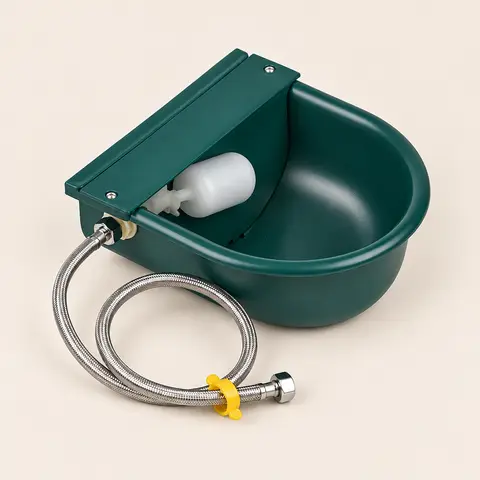
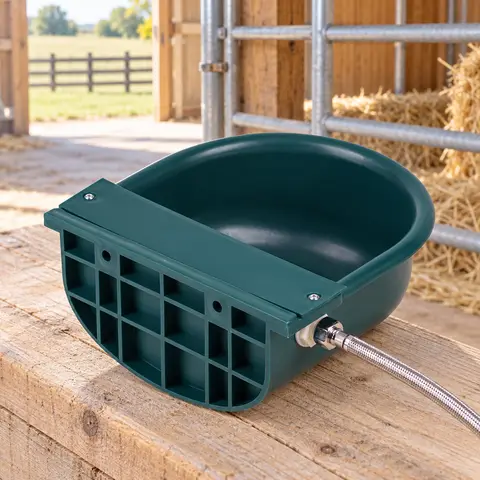
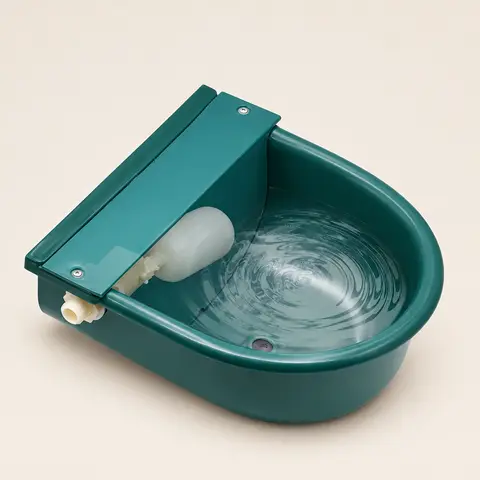
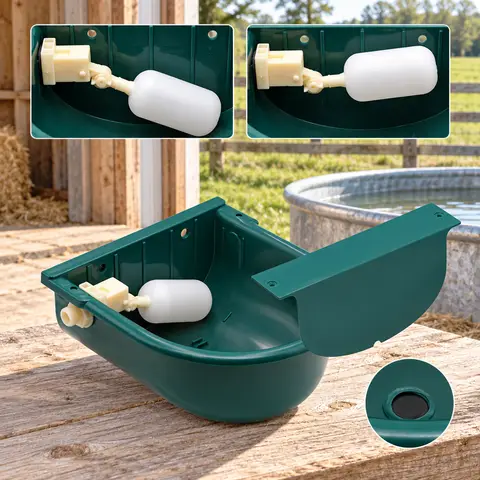
The supply line runs below the frost line and rises inside an insulated tube. A float valve refills a small bowl as animals drink, so little water sits exposed to cold air. Many models add a low-watt heater for the coldest nights. Small bowls also stay cleaner than a big tank.
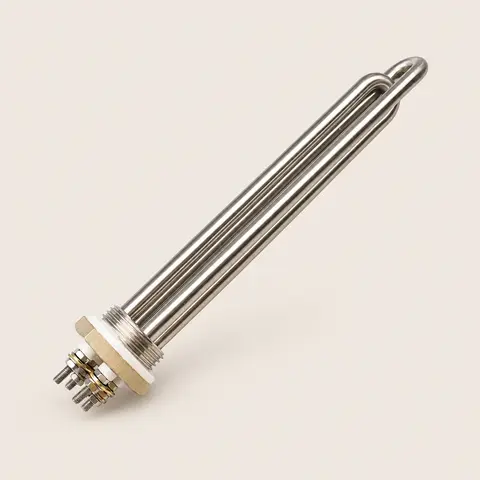
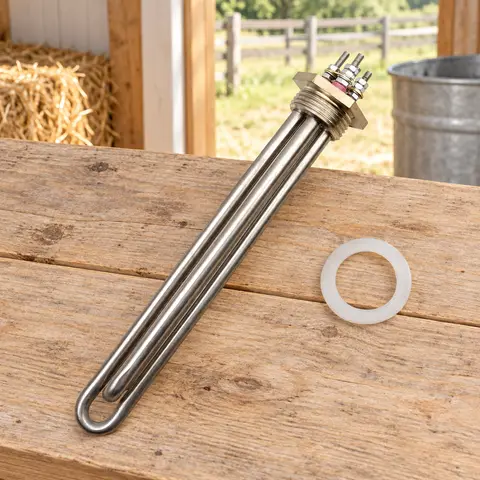
Automatic bowls and heaters
/ Keep an existing trough from freezing
- 01Pick the right heaterFloating deicers suit plastic and metal tanks; drain plug heaters fit tanks with a threaded drain.
- 02Protect the cordRun cords through metal conduit or a cord guard so animals cannot chew them.
- 03Use a GFCI outletAlways plug heaters into a GFCI-protected outlet.
- 04Insulate and shelterPartially cover the tank and place it on the south side of a building, out of the wind.
/ Winter water for chickens
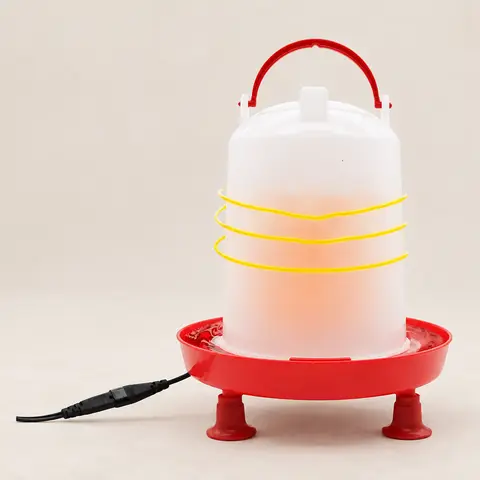
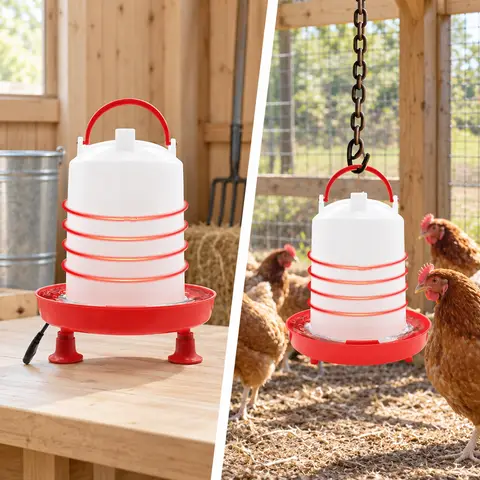
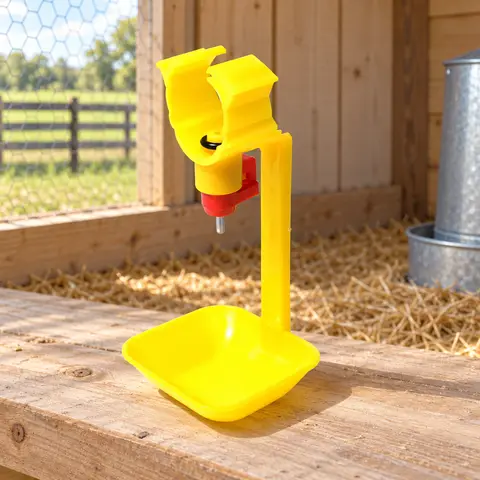
Hens stop laying quickly without water. A heated base or heated waterer keeps it liquid in the coop; nipple drinkers can freeze, so switch to a heated cup or bowl style in deep cold.
For the coop
 Save -20%

/ Tips that save energy
- Use thermostatically controlled heaters that switch off above freezing.
- Insulate the sides of the tank or set it partly into the ground.
- Choose a smaller trough in winter so less water needs heating.
- Keep water moving with a small circulation pump where power is available.
/ Herd care checklist
| Frequency | Tasks |
|---|---|
| Daily | Fresh water, feed, quick look at every animal's eyes, gait and appetite |
| Weekly | Clean waterers, check fences, refresh minerals |
| Monthly | Body condition score, check hooves, FAMACHA eyelid check for goats and sheep |
| Yearly | Vet visit, vaccinations, review feed plan |
/ Frequently asked
What is a frost-free water trough?+
A waterer designed to stay open in freezing weather, using a buried supply line, insulation and often a small thermostatic heater.
How do I keep a water trough from freezing without electricity?+
Use an insulated or partly buried tank, a dark cover on the sunny side, floating balls that move in the wind, or a ground-heat frost-free waterer. In deep cold, break ice at least twice a day.
Are trough heaters safe?+
Yes when used with a guard, chew-proof cord protection and a GFCI outlet. Check regularly for stray voltage.
How much electricity does a trough deicer use?+
Most use 250-1,500 watts but only run when the water nears freezing if they have a thermostat.
Do horses prefer warm water?+
Studies show horses drink more when water is slightly warm rather than near freezing.