
Growing & Preservation · 7 min read
Honey extractor guide: manual extractors vs. honey presses for small apiaries
A centrifugal extractor spins honey out and gives the comb back to the bees; a press crushes comb for top-bar and foundationless hives. How to choose, and how to run your first harvest.
By COOPFORGE Field Desk · Updated
Key takeaways
- An extractor spins honey out of uncapped frames and leaves the comb for the bees to refill.
- A press crushes the comb, which suits top-bar hives, foundationless frames and cut comb.
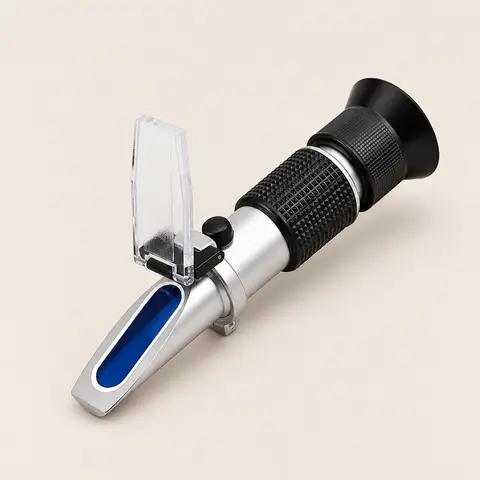
- Only harvest frames that are mostly capped, and check moisture with a refractometer.
- Strain honey and let it settle before bottling for a clear jar.
/ Extractor or press?
| Tool | How it works | Best for |
|---|---|---|
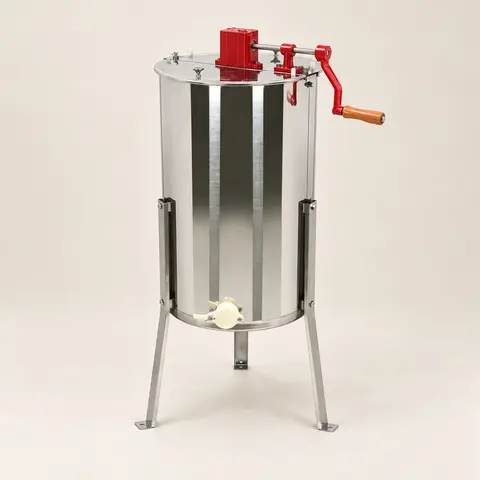
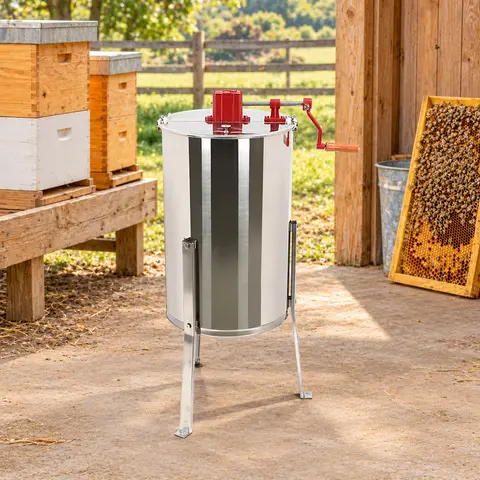
| Manual extractor | Frames spin in a drum and honey is thrown out of the cells | Langstroth or similar framed hives where you want to reuse the drawn comb |
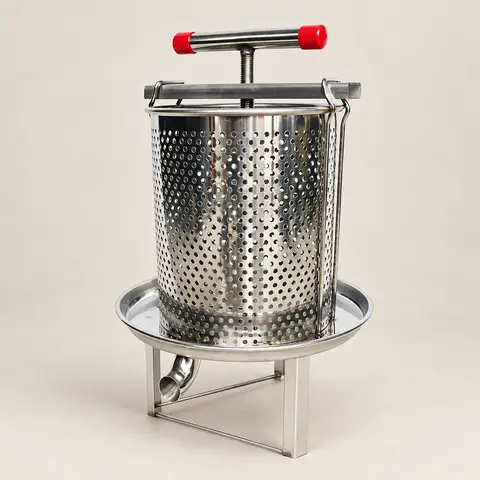
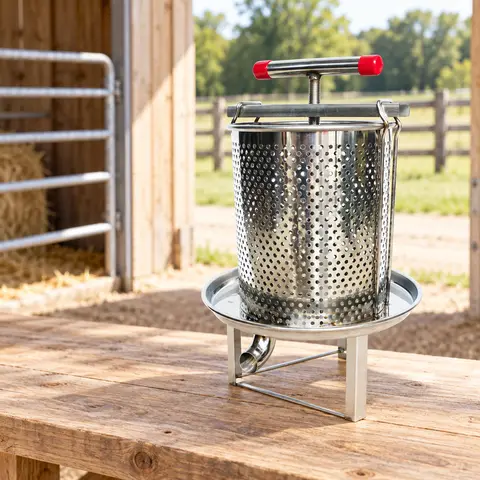
| Honey press | Comb is crushed and honey is squeezed through a filter | Top-bar hives, foundationless frames, cappings and small harvests |
Reusing drawn comb saves the bees a lot of work, so beekeepers with framed hives usually prefer an extractor. A press is simpler and cheaper to clean, and it also gets the last honey out of cappings and broken comb.
/ When frames are ready
- Most of the frame is capped with wax; many beekeepers wait for at least about three quarters capped.
- Uncapped cells do not drip honey when you shake the frame sharply over the hive.
- A refractometer reading confirms the honey is dry enough to keep without fermenting.
/ Running your first extraction
- 01Set up a clean, warm roomWarm honey flows much better. Work indoors away from bees, with the floor covered and everything washed.
- 02Uncap the framesSlice or scratch off the wax cappings over a tray, keeping the cappings to press or drain later.
- 03Load and balancePut frames of similar weight opposite each other so the extractor does not wobble.
- 04Spin slowly, then fasterStart slowly so heavy full comb does not break, spin one side partway, turn the frames and finish both sides.
- 05Strain and settleDrain through a strainer into a bucket and let it sit a day or two so air bubbles rise before bottling.
- 06Give the frames backReturn wet frames to the hive for the bees to clean, or store them protected from wax moths.
Honey harvest gear in the store


/ Growing season checklist
| Season | Tasks |
|---|---|
| Late winter | Order seed, start seedlings indoors, service irrigation |
| Spring | Top up compost, set drip lines, harden off seedlings |
| Summer | Mulch, check timers, harvest often |
| Fall | Plant cover crops, drain lines before frost |
/ Frequently asked
Do I need an extractor for one or two hives?+
Not always. A press or crush-and-strain method works well for small harvests. An extractor pays off when you want to reuse drawn comb year after year.
How much honey does one frame hold?+
A full medium frame often holds a few pounds of honey and a deep frame more, depending on how well it is drawn and capped.
Why is my honey foamy after extracting?+
Spinning traps air. Let the honey rest in a bucket for a day or two and the bubbles rise to the top, where you can skim them off.