
Fencing, Power & Water · 7 min read
Electric fence for chickens: netting, wire height and charger size
An electric fence keeps foxes, raccoons and dogs away from free-ranging hens. How to choose poultry netting or strands, set wire heights and size the energizer.
By COOPFORGE Field Desk · Updated
Key takeaways
- Electric poultry netting is the simplest predator barrier for moving flocks.
- With strands, keep the lowest hot wire close to the ground; most diggers test the bottom first.
- A good ground system matters as much as the charger.
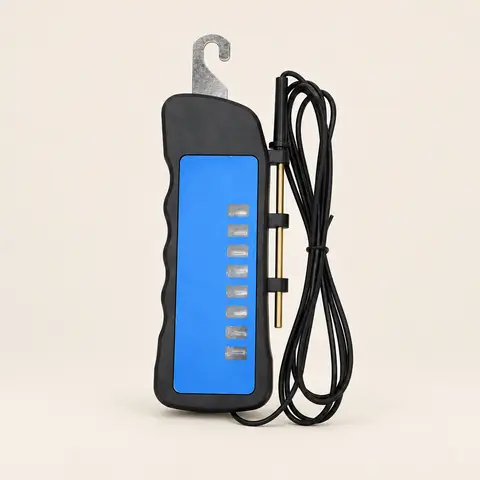
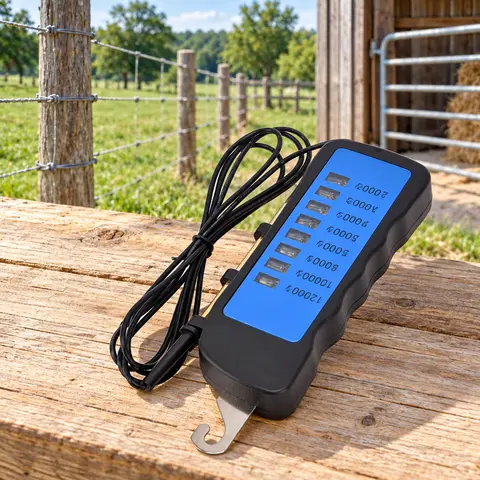
- Check fence voltage weekly with a tester and clear grass touching the bottom wire.
/ Why electric works for poultry
Most chicken predators test a fence with their nose or try to dig under it. An electric fence gives them a sharp, safe shock at that first touch, and they learn to stay away. It also lets you move a flock around pasture without building permanent runs.
/ Netting or strands?
| Option | Pros | Cons |
|---|---|---|
| Electric poultry netting | Quick to move, blocks small predators | Grass must be kept short under it |
| Multi-strand wire | Lower cost over long runs, fewer shorts from grass | Gaps can let chicks through |
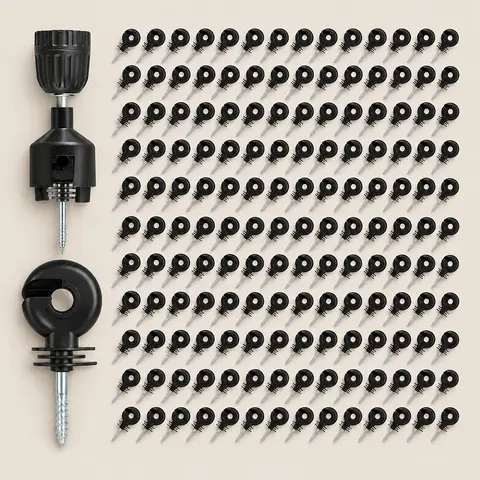
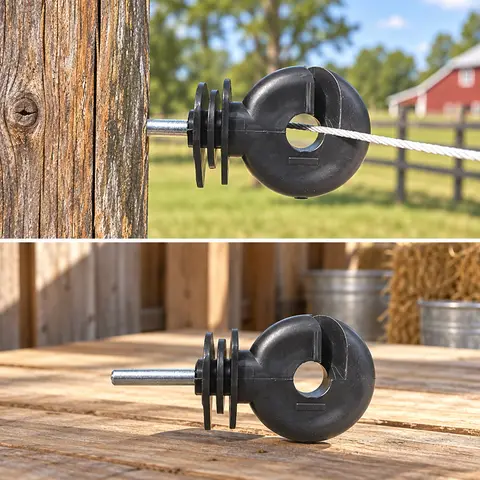
| Offset wire on an existing fence | Stops climbing and digging at a permanent run | Needs insulators on every post |
/ Wire heights for strands
- Lowest hot wire: about 4-6 in. above the ground to stop diggers.
- Add strands every 6-8 in. up to about 3-4 ft.
- For climbers such as raccoons, add an offset hot wire near the top of an existing fence.
/ Sizing the charger
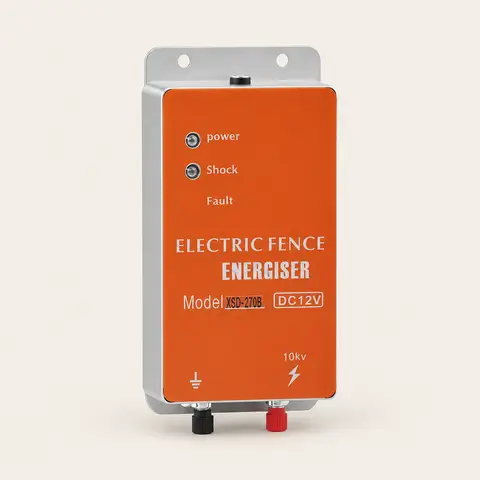
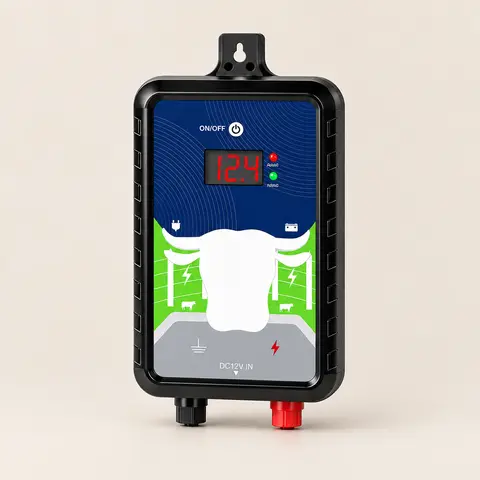
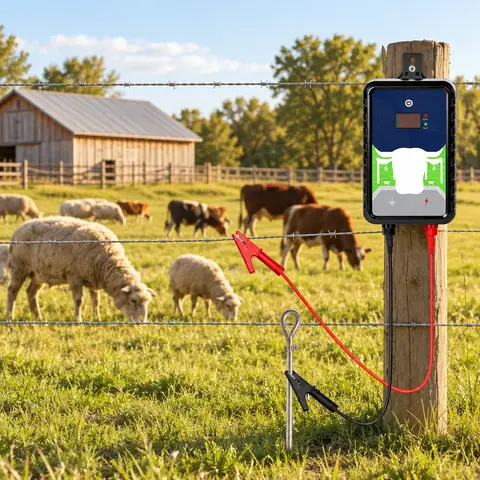
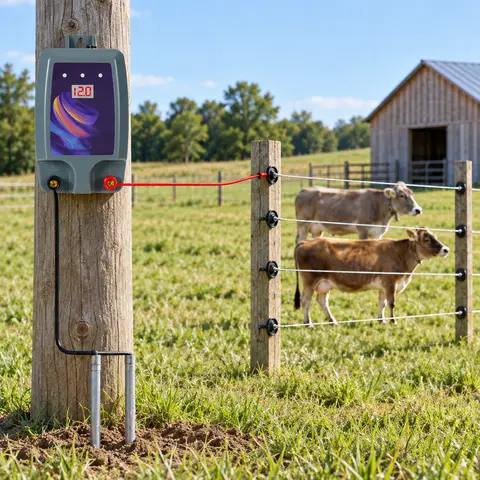
Netting has lots of conductor in a short length and touches more grass, so it needs a charger with enough power to push through some vegetation. Size the energizer for the total length of wire or netting, then add a margin for weeds. Solar energizers suit pasture away from outlets; plug-in and 12V models suit fences near the barn.
Energizers


Testers and insulators
/ Fence maintenance checklist
| Frequency | Tasks |
|---|---|
| Weekly | Walk or drive the line, check voltage at the far end |
| Monthly | Clear vegetation, tighten wires, check insulators |
| Seasonally | Test ground rods, inspect gates and corners |
/ Frequently asked
Will an electric fence hurt my chickens?+
Chickens are well insulated by feathers and rarely get shocked; when they do, the pulse is brief and they learn to keep away.
How high should an electric fence for chickens be?+
Poultry netting is commonly around 42-48 in. tall. With strands, run them from about 4-6 in. above the ground up to about 3-4 ft.
Do I need a special charger for poultry netting?+
Choose an energizer rated for the length of netting you run, with spare power for grass touching the bottom strand.