
Field & Chore Equipment · 8 min read
How to sharpen a chainsaw chain: file, hand-crank or electric sharpener
A sharp chain throws chips, not dust. Learn when a chain needs sharpening, how to match the file to your chain and how to get even cutters with a file, a hand-crank tool or an electric sharpener.
By COOPFORGE Field Desk · Updated
Key takeaways
- Sharpen when the saw makes fine dust instead of chips, pulls to one side or needs pushing.
- The file or grinding stone must match your chain's pitch; the size is printed in the chain or saw manual.
- Give every cutter the same number of strokes so the chain cuts straight.
- Check the depth gauges every few sharpenings and lower them only to the chain maker's setting.
/ How to tell a chain is dull
A sharp chain pulls itself into the wood and leaves thick, square chips. A dull one makes powdery sawdust, wanders off line, smokes in the cut and needs you to lean on the saw. Hitting dirt, stones or a fence staple dulls a chain in seconds, so firewood and fence-line work wear chains far faster than clean logs.
- Fine dust instead of chips
- The bar pulls to one side, which usually means cutters on one side are shorter or duller
- You have to push down to make the saw cut
- Smoke or a burnt smell even with good bar oil
/ Match the tool to your chain
Every chain has a pitch (the spacing between links) and each pitch uses a specific round file or grinding stone diameter. Using the wrong size either leaves the cutter blunt or grinds away too much steel. The correct size is in your chain or saw manual and is often stamped on the drive links or printed on the chain box.
| Chain pitch | Typical round file | Typical use |
|---|---|---|
| 1/4 in. | 5/32 in. (4.0 mm) | Small pole and top-handle saws |
| 3/8 in. low profile | 5/32 in. (4.0 mm) | Homeowner and light farm saws |
| .325 in. | 3/16 in. (4.8 mm) | Mid-size farm saws |
| 3/8 in. full profile | 7/32 in. (5.5 mm) | Larger saws for firewood and felling |
/ Sharpening step by step
- 01Secure the sawClamp the bar in a vise or use a stump vise so the chain cannot move. Engage the chain brake and wear gloves.
- 02Mark your starting cutterPut a paint or marker dot on the first cutter so you know when you have gone all the way round.
- 03Hold the guide angleMost chains use a top-plate angle around 25-35 degrees; many files and sharpeners have the angle marked on the guide. Keep the file level and stroke from the inside of the cutter outward.
- 04Count your strokesGive each cutter the same number of firm forward strokes, usually two to five. Sharpen every cutter on one side, then turn the saw and do the other side.
- 05Check the depth gaugesAfter several sharpenings, lay a depth-gauge tool across the chain and file down any raker that sticks up, to the setting your chain maker lists.
- 06Oil and testRe-tension the chain, oil it and make a test cut. You should see clean chips straight away.
/ File, hand-crank or electric?
| Tool | Good for | Watch out for |
|---|---|---|
| Round file with guide | Touch-ups in the field, lowest cost | Takes practice to keep angles even |
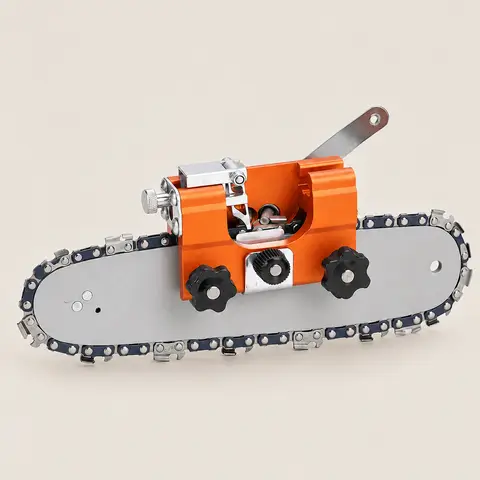
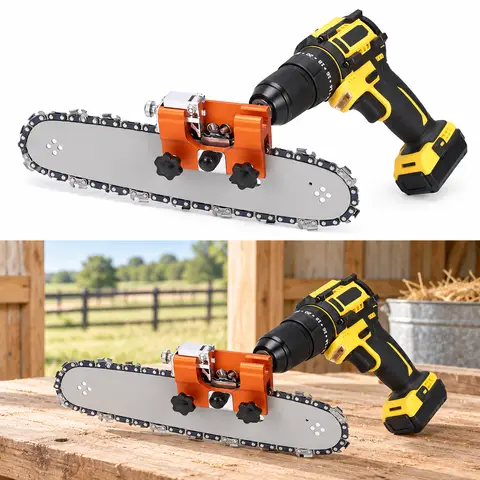
| Hand-cranked sharpener | Even angles without power, quiet bench work | Slower on badly damaged chains |
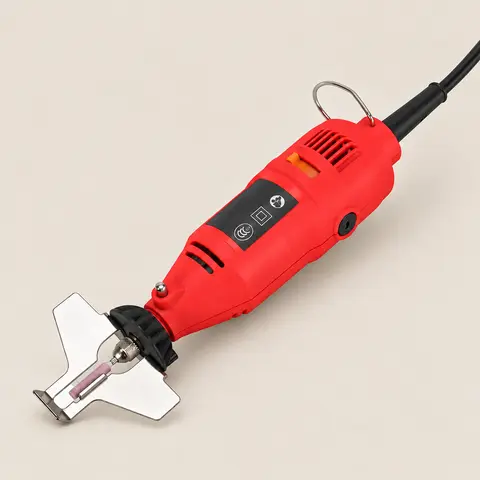
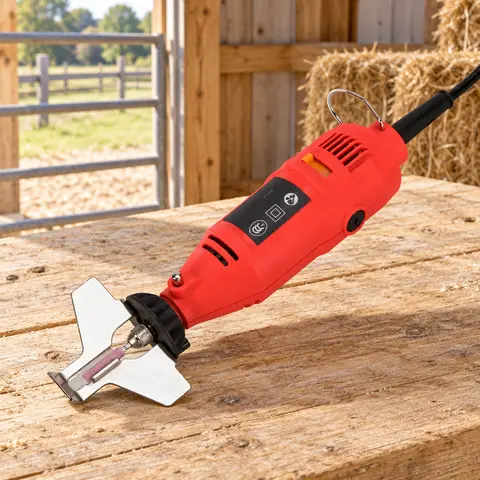
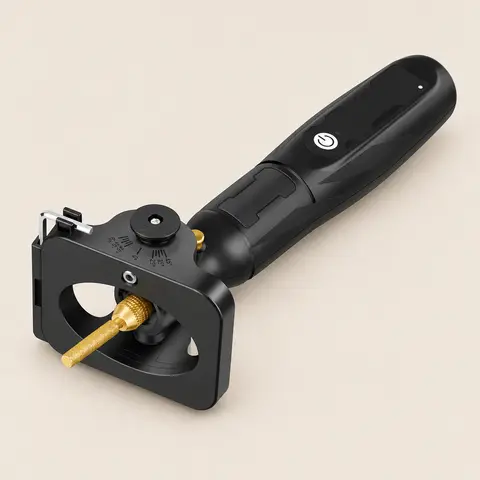
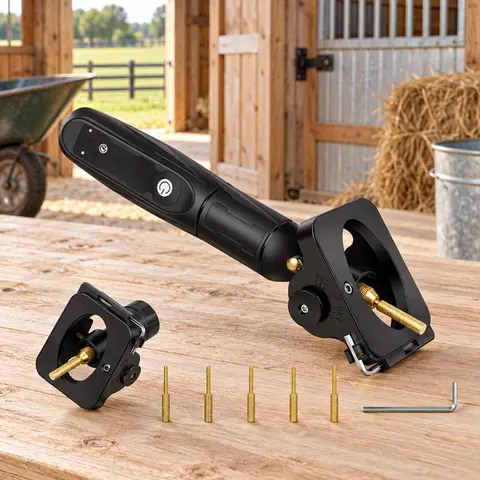
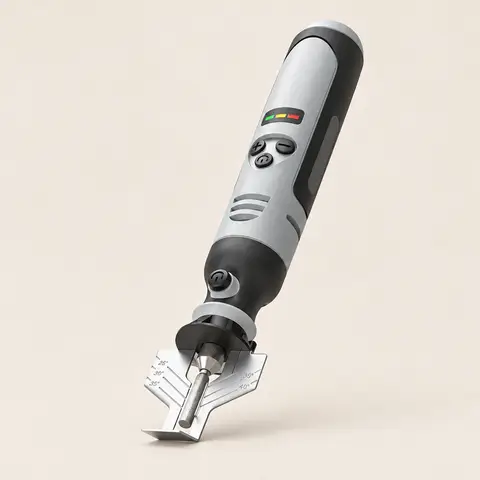
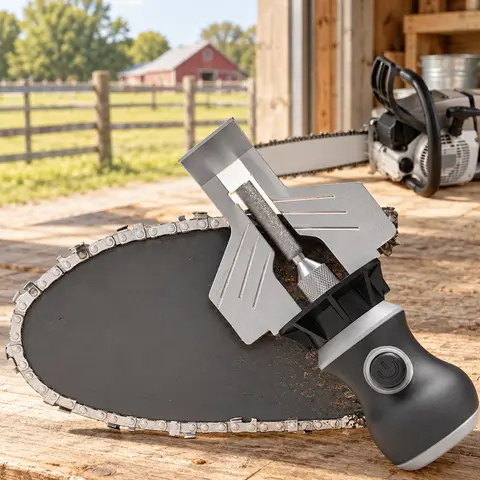
| Battery or electric handheld sharpener | Quick touch-ups on several chains, little hand effort | Take light passes; too much pressure overheats the cutter |
Chainsaw sharpeners in the store
/ Equipment care checklist
| Frequency | Tasks |
|---|---|
| After use | Clean off mud and manure, hang tools |
| Monthly | Check tire pressure, grease fittings, sharpen blades |
| Before winter | Drain water lines, store batteries warm, stabilize fuel |
/ Frequently asked
How often should I sharpen a chainsaw chain?+
Many owners touch up the chain every time they refuel, and always after hitting dirt or a stone.
Can I sharpen a chain without removing it?+
Yes. With a file, a hand-crank tool or a handheld electric sharpener you can sharpen the chain on the bar once the saw is secured and the brake is on.
Why does my saw cut crooked after sharpening?+
Cutters on one side are usually longer or sharper than the other. Even them out with the same number of strokes per cutter.